Best Business Practices for Churches and Small Religious Organizations

man in white t shirt and white pants standing beside white van

A single-day seminar on how church and other small religious organizations can improve their strategies, operations, and fundraising.

By Mark D. Harris

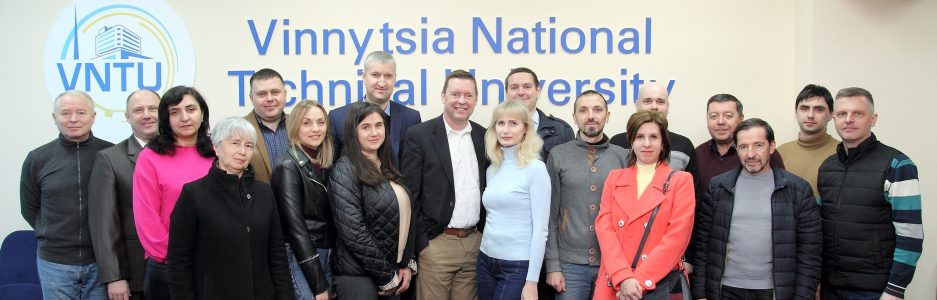
Welcome! The team at the MD Harris Institute is glad that you have chosen to attend. We are thankful that President Khmyz and his team at the Kyiv Theological Seminary arranged this seminar to help Christian leaders throughout the region improve their business and fundraising practices. The information here will improve how these leaders acquire, use, and increase the resources that God provides.

The gates of hell shall not prevail against the Church of Jesus Christ (Matthew 16:17-19). No nation, no matter how powerful, populous, or prosperous, can stand against the work of the preacher from Galilee. No religion, no matter how large or how violent, can quiet the still, small voice of the Almighty. Followers of Christ have the Spirit of the Living God dwelling within, have been set free from sin, and have a guarantee of eternity with the Creator. Of all men, Christians should be the most joyful in their lives and most effective in their labor.

Some Christians engage the world with optimism and faith, believing God to accomplish His will, though often believers do not see this victory. Christians perceive legions of enemies, a dearth of friends, a paucity of resources, persecution, and personal weakness (Marsden, 2020). There are more points of discouragement as well. Believers feel pressure from the government, the media, business, and academia (Barnes et al., 2020). Christ-followers look at needs within and without and faint before the task of making disciples. Simultaneously, forgetting that the Father owns the world and everything in it (Psalms 24:1) and believing the lies of a world that hates God, some Christians struggle to survive.

Continue reading “Best Business Practices for Churches and Small Religious Organizations”

Saratoga Campaign 1777

The Battle of Saratoga was a turning point in the American Revolution. Leaders like John Burgoyne, Horatio Gates, and Benedict Arnold, with thousands of valiant men, fought in a drama that would change the world.

By Mark D. Harris, MD, MPH, MBA, MDiv, ThM, PhD, DBA

Background: The Road to Saratoga

After fighting side by side to defeat the French and Indians (1756-1763), Britain and her American colonies drifted apart. Laboring under a heavy debt, Parliament increased taxation and control over the Americans. The Quebec Act (1774) was intended to build support for Britain among the Catholic French Canadians, institute the French system of civil law,[1] and limit colonial migration into the Ohio Valley. However, it infuriated English colonists. But it, and other “intolerable acts,” provided the tipping point into revolution.

Before Congress even declared America to be a new nation (4 July 1776), American rebels captured Fort Ticonderoga (10 May 1775), Crown Point, Fort St. Johns (17 Sep to 3 Nov 1775), and Montreal in the early months of the conflict. US General Richard Montgomery commanded about 1000 militia through the St. Lawrence River north to Quebec. Moving primarily by water, they brought most of the artillery and supplies. US General Benedict Arnold began taking about 1000 militia through the wilderness of Maine, from the Kennebec River to the Chaudière River. Having started in July, Arnold’s force lost about 500 men to starvation, desertion, expiring enlistments, and disease (smallpox). Montgomery’s force diminished to 700 by expiring enlistments.

Continue reading “Saratoga Campaign 1777”

The Battle of Tarawa: America’s Early Lesson in WWII Amphibious Warfare

By Mark D. Harris, MD, MPH, MBA, MDiv, ThM, PhD, DBA

What was the Battle of Tarawa in World War II? Why was it important then,…and today?

The morning of November 20, 1943, dawned over a small coral atoll in the Central Pacific that few Americans had ever heard of. Within seventy-six hours, Tarawa would become seared into the American consciousness as one of the most savage battles of World War II. The ferocious fighting on this tiny strip of land, barely twelve square miles in total area, would claim over 6,000 lives and fundamentally transform how the United States Navy and Marine Corps conducted amphibious operations for the remainder of the war.

Continue reading “The Battle of Tarawa: America’s Early Lesson in WWII Amphibious Warfare”

Christian and Secular Paradigms and Treatments in Mental Health

a priest consoling a man

Discussions of mental health flood the airwaves and the digital space in modern life. Current treatments are based on the assumption that mental health problems are diseases, much like polio is a disease, and need to be treated like any other disease. There is no place for religion, much less judgment, in this “scientific” paradigm. But the Christian Bible commands people to look at mental health through more than just that lens.

By Mark D. Harris, MD, MPH, MBA, MDiv, ThM, PhD, DBA

The Scientific Paradigm for Mental Health

A paradigm is how a person looks at reality, including how he or she sees problems. All paradigms rely on shared assumptions and a shared framework for research. Scientific paradigms are naturalistic by design, meaning that there is no room for God or for the supernatural. When applying the scientific paradigm to health, diseases and injuries arise from observable causes through logical mechanisms, and diagnoses and treatments are objective and effective. There is no room for sin, guilt, or miraculous healings in a purely scientific paradigm.

Consider the following as an example of the scientific paradigm applied to medicine. Chronic obstructive pulmonary disease (COPD) is suggested by the history and physical exam but diagnosed with pulmonary function and other measurable tests. Imaging studies, laboratory findings, and tissue biopsy show changes consistent with a diagnosis of COPD. Treatment involves medication, pulmonary rehabilitation, risk factor cessation (like smoking), efforts to minimize complications, and other lifestyle changes. With the best possible care, COPD treatment can improve quality of life and longevity.

Modern secular science, using the scientific paradigm, views mental health conditions as diseases that should be treated like other diseases, like COPD. That means that the diagnosis of depression or anxiety should rely on observable phenomena, such as imaging, lab tests, or biopsies. They don’t. Diagnoses and treatments should be consistent between observers, with Psychiatrists A, B, and C generally agreeing on who has what disease and what to do about it. The bible of Mental Health, the Diagnostic and Statistical Manual of Mental Disorders (DSM-5), is a list of disease constructs (Depression, Bipolar, Schizophrenia, etc.) followed by a list of criteria to diagnose each mental health “disease”. These diagnostic criteria are entirely subjective, depending upon statements of patients, parents, teachers, and others, without support from physical examination,  laboratory or imaging.[1]

The scientific paradigm alone has not significantly improved outcomes such as prevalence for mental health patients.

Continue reading “Christian and Secular Paradigms and Treatments in Mental Health”

Why Ukraine will endure

I wrote the article below, Why Ukraine will endure, on 27 Feb 2022, shortly after the Russians invaded Ukraine. I did not publish it at the time, though I don’t remember why. While in Kyiv last month, I told Dr. Rick Perhai and others from Kyiv Theological Seminary about the article, and he asked to see a copy. I knew that I had written the piece, but forgot that it was never actually published. So, I couldn’t find it on the MDHI website. Going through my hard drive archives today, while looking for something else, I found the lost article.

On one hand, I have been proven right. Against all odds, Ukraine has endured. Despite the emigration of Ukrainians, many stayed behind to defend their homeland. On the other hand, I did not foresee the momentous changes in warfare occasioned by this conflict. Drones and electronic warfare have revolutionized combat. Ukraine has proven itself masterful at using everything in its arsenal, and more importantly, in its people’s imaginations, to stop the Russian onslaught.

Diplomatically, sanctions have not been as effective as hoped, but then again, sanctions never are. China, North Korea, and India are providing Russia with more than token support. Putin still believes that he is winning and still refuses to negotiate in good faith for peace.

So, for my friends in Ukraine, I have now found the article that I told you about. Happy reading!

By Mark D. Harris, MD, MPH, MBA, MDiv, ThM, PhD, DBA.

Continue reading “Why Ukraine will endure”

Jerusalem’s Hidden Gems

Tourists, pilgrims, scholars, and activists can encounter little-known places outside and inside the Old City of Jerusalem. By looking at these hidden gems in Jerusalem, the minds, bodies, and souls of faithful Christ-followers will receive a blessing.[1]

By Mark D. Harris, MD, MPH, MBA, MDiv, ThM, PhD, DBA

The murmurs of tourists and the low rumble of shopkeepers fill the Old City of Jerusalem. From the Via Dolorosa to the Church of the Holy Sepulcher and the Wailing Wall, Christians and Jews come here to find God, or to find Him again. Muslims visit the Islamic Quarter, the Dome of the Rock, and the al-Aqsa Mosque. Many tourists jet in for a week, visit the Old City of Jerusalem and Bethlehem, jet out, and never set foot elsewhere in Israel, the West Bank, or other areas mentioned in scripture. Others stay much longer to soak their bodies and souls in the Land of the Bible.

Continue reading “Jerusalem’s Hidden Gems”